America’s oldest continuously published Black newspaper highlights NABML’s role in a growing South Florida movement — and the national case for microschooling as a tool for Black student equity.
The Miami Times — one of the oldest Black-owned newspapers in the country, publishing since 1923 — turned its lens on South Florida’s growing micro-school movement in a March 2025 feature story. The piece, “Small Classrooms, Big Impact: How South Florida’s Micro-Schools Empower Black Students with Personalized Learning,” documents how innovative learning environments across Miami-Dade and Broward counties are delivering something the traditional school system has consistently failed to offer Black children: personalized attention, cultural affirmation, and genuine belonging. NABML Founder Nicole Stewart-Jones is quoted as a national authority on why the microschool model matters specifically for Black students.
“Micro-schooling isn’t just a trend — it’s a transformative model that addresses key issues faced by marginalized students. It empowers students, particularly those who’ve been overlooked by traditional systems, to experience a more student-centered, flexible and impactful education.”
— Nicole Stewart-Jones, NABML Founder, as quoted in The Miami Times
What the Article Covers
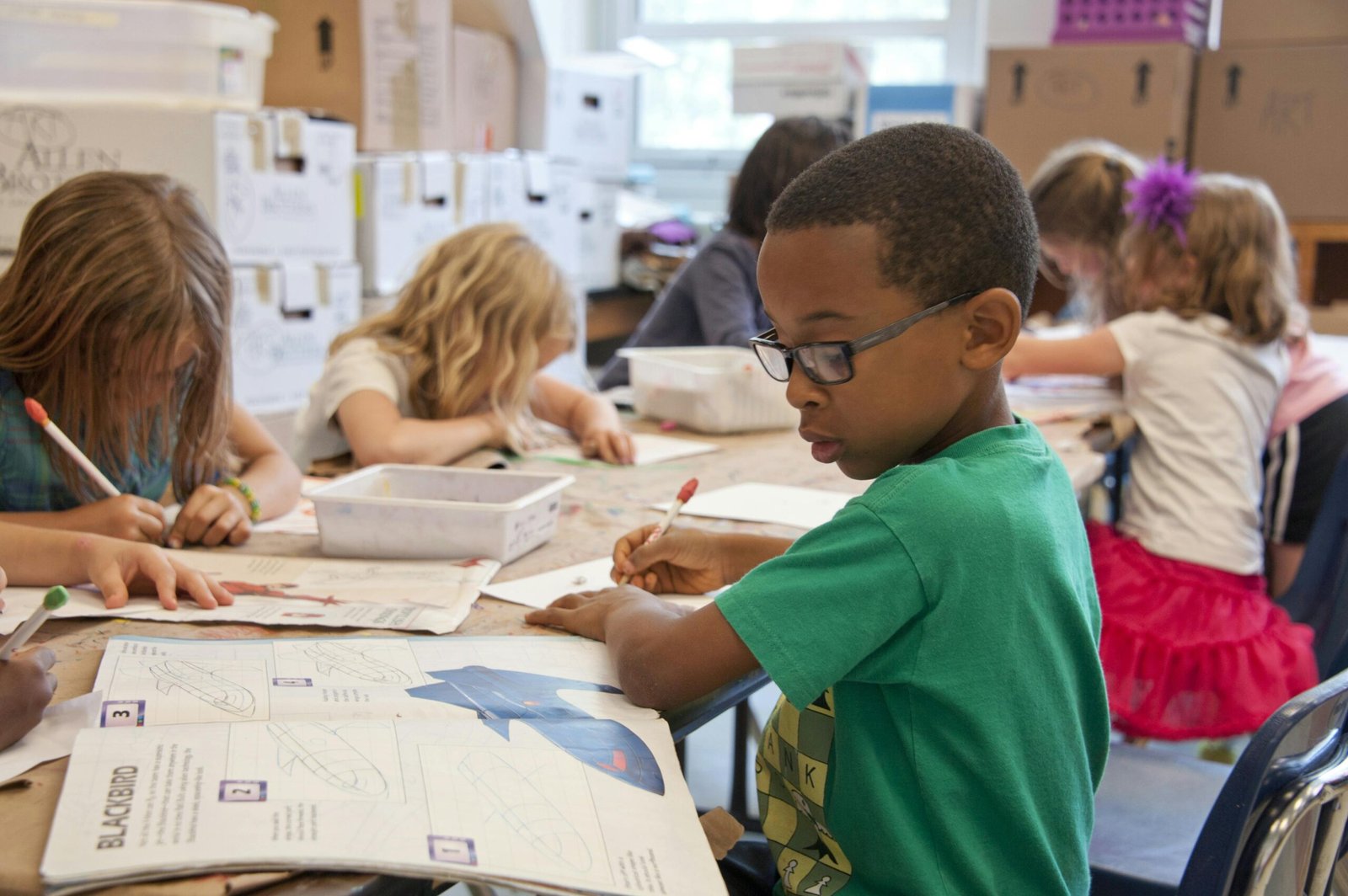
The feature opens inside Liberty City’s Primer Microschool, where kindergartners are singing, dancing, and learning the alphabet with kinesthetic movement — a scene that captures exactly what distinguishes the microschool model from the test-and-compliance culture of conventional schools. The article then zooms out to document the broader landscape: between 1 and 2 million students attended micro-schools nationwide during the 2022–23 school year, and Florida alone has over 250 such programs, many of which accept state scholarship funding averaging $8,000 per student.
The stakes for Black children are made clear early. The article cites research showing that teacher bias contributes to disparities in academic performance and suspension rates, and that classrooms serving higher concentrations of Black and Hispanic students tend to receive lower-quality instruction. Against that backdrop, Stewart-Jones is brought in to explain what micro-schools offer that the traditional system cannot: a learning environment that cultivates belonging, identity, and equity — and that directly addresses the reading gaps and declining graduation rates that have long plagued Black communities.
The piece profiles three South Florida micro-schools in depth — Primer (Liberty City), MicroLearn Hub (Miami), and Colossal Academy (Fort Lauderdale) — each illustrating a different facet of the movement’s breadth. Primer uses mixed-age groupings, passion projects, and kinesthetic learning. MicroLearn Hub offers mastery-based, fully personalized online instruction with plans to open a physical space. Colossal Academy blends academic rigor with entrepreneurship, partners with Arizona State University for college-level coursework, and uses Education Savings Accounts to keep monthly family contributions as low as $125. Colossal Academy’s founder, Shiren Rattigan, is noted as an NABML member — a direct acknowledgment of the association’s growing national network.
Throughout, the article returns to the voices of students and parents to illustrate impact. One parent describes how her son has become more outspoken and academically stronger since transitioning from a charter school. Students speak of learning barbering, engineering, baking, and graphic design through passion projects — practical skills and genuine interests that a standardized curriculum would never have made room for.
Why This Coverage Matters
The Miami Times is not just any outlet. It is an institution — the paper of record for Black Miami for over a century. When it covers micro-schools as a serious answer to educational inequity for Black children, it is not trend-chasing. It is documentation. And NABML’s inclusion as the national voice on why this model matters for Black students positions the organization exactly where it belongs: as the authority that connects local innovation to national movement.
For families in South Florida and beyond, this article is a guide. For founders already in the NABML network or considering joining, it is a portrait of what their work looks like at its best. For funders and policy makers, it is evidence — grounded in real classrooms, real children, and real outcomes — that micro-schools are not an experiment. They are a solution.